
Leave a car parked in summer sun and the top of the dashboard becomes one of the hottest spots in the cabin. Head units sit in the dash, and wireless CarPlay and Android Auto adapters, dash cams and phone chargers are often mounted on or near it. When a screen freezes, a connection drops or a device restarts only on hot days, heat is a common culprit. This guide explains where that heat comes from, where it goes, and why the board under the chips matters.
Every electronic device turns some of the power it uses into heat. In a small adapter, the main sources are the processor, the Wi-Fi and Bluetooth radios that keep a wireless link alive, and the circuitry that converts the car’s supply into the lower voltages the chips need. Engineers treat getting rid of that heat as a discipline of its own, the thermal management of electronic devices, because it improves reliability and helps prevent premature failure. Inside a car, a device also has to cope with heat it did not create: warm air, sunlight through the windshield and a closed cabin.
Where the heat goes
Heat always moves from hot to cold, and in electronics it follows a chain: from the chip, through its package, into the circuit board, then into the case or a heat sink, and finally into the surrounding air. Each step resists that flow a little. Engineers call this thermal resistance and measure it in degrees Celsius per watt, so a higher number means a part runs hotter for the same amount of power. When one link in the chain is weak, heat piles up behind it and everything upstream runs warmer than it should.
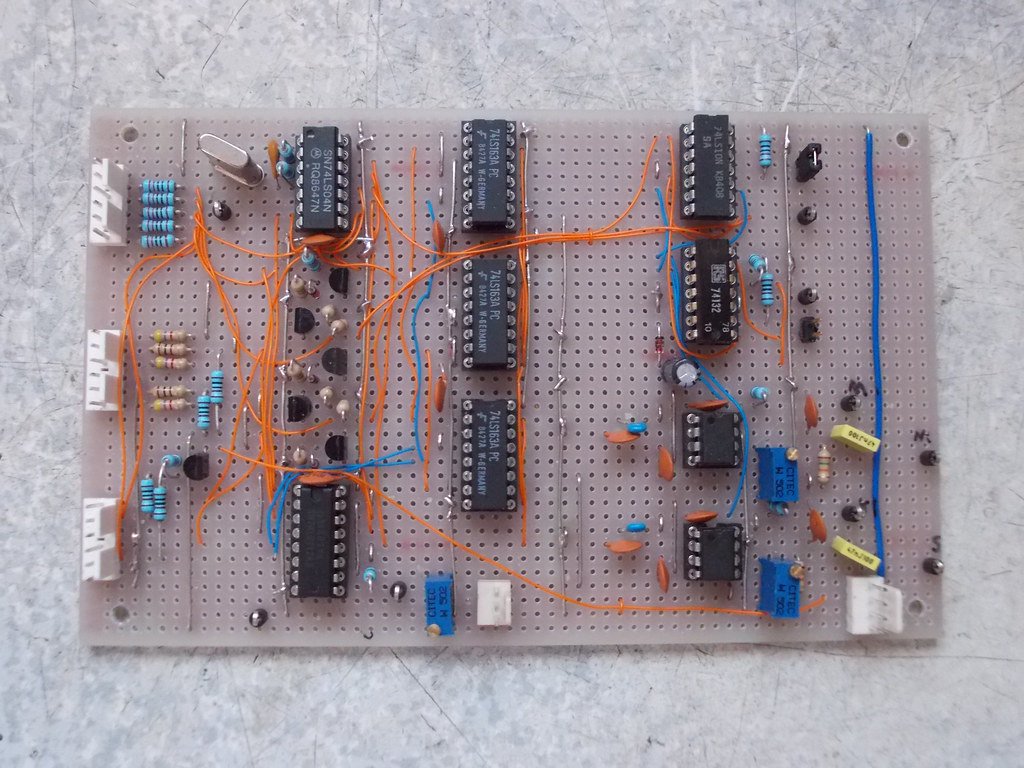
The board is a bigger part of that chain than most people assume. Most consumer electronics are built on FR-4, a laminate of woven glass fiber and epoxy resin. It is cheap, easy to manufacture and perfectly adequate for low-power circuits, but it conducts heat poorly, at around 0.3–0.4 W/m·K, and its continuous operating limit is roughly 130 °C. For a typical low-power gadget that is rarely a problem on its own. Trouble starts with local hot spots, where one small component dissipates a lot of power and the board cannot spread that heat away fast enough.
Comparing substrates for heat
Ceramic boards are the usual step up, and alumina (aluminum oxide) is the most common of them. A reference page on the thermal conductivity of alumina sets out the numbers behind the comparison: commercial grades sit at roughly 10–22 W/m·K depending on purity, against 0.3–0.4 W/m·K for FR-4, so heat crosses the board dozens of times more easily. The figure is not fixed, though: high-purity alumina keeps only about 80% of its room-temperature value at 200 °C. Alumina is also an electrical insulator, with a volume resistivity above 10^13 Ω·cm, so circuits can sit directly on it. In everyday terms, the board stops being a barrier and becomes part of the cooling path.
For harder jobs there are better conductors, at a price. Silicon nitride and silicon carbide reach around 80–100 W/m·K, while aluminum nitride combines electrical insulation with very high thermal conductivity; typical commercial substrate grades are quoted at roughly 170–230 W/m·K. The trade-off is cost: aluminum nitride runs about five to ten times the price of alumina. A common rule of thumb is that alumina handles a heat flux below about 10 W/cm², the band between 10 and 30 W/cm² is a judgment call, and aluminum nitride is usually the better fit above about 30 W/cm².
Choosing a board
Picking a ceramic board involves more than picking a material, although alumina dominates here too: 95% alumina accounts for roughly 90% of ceramic substrates. Thickness usually falls between 0.25 and 2.0 mm, with 0.635–1.0 mm covering most LED and power-module designs. The copper circuit also has to be bonded to the ceramic, and the method shapes what the board can do: direct bonded copper (DBC) uses copper 0.127–0.4 mm thick for high currents, direct plated copper (DPC) allows lines narrower than 100 μm, and thick-film pastes are fired at 600–900 °C. If you want to see those trade-offs together, an overview of how to choose a ceramic substrate compares materials, thickness and metallization in one place.
Not every gadget needs a ceramic board. Ceramic boards cost roughly 10 to 30 times more than FR-4, so they make sense where the numbers demand it: power density above about 1 W/mm² or continuous temperatures above 150 °C. Below those thresholds, an FR-4 board with a sensible layout, generous copper areas and a well-ventilated case is usually the more economical answer. For a driver, the takeaway is simpler: a device can only shed heat as fast as its weakest link allows, and the link you control is the last one, the air around it.
What this means for drivers
The practical lesson is that heat problems are rarely about one part. Whatever board sits inside an adapter or head unit, it can only pass heat on if the air around the device can carry it away. A few simple habits help:
- Keep a running adapter out of a closed glovebox or center-console compartment if the cable length allows it.
- Avoid leaving devices in direct sun on top of the dashboard while the car is parked.
- Keep vents on head units and chargers clear of phone mounts, cloths and papers.
- On very hot days, run the air conditioning for a few minutes before starting a long drive with navigation and music streaming.
If a freeze or disconnect only shows up on hot afternoons and disappears once the cabin cools, heat is a likely suspect, and it is worth checking where the device sits and how much air reaches it before changing settings or swapping cables. If the problem appears in every kind of weather, the cause is more likely elsewhere, such as software, pairing or the cable itself. Board materials help decide how much heat a circuit can move, but where a device is placed decides how much heat it has to handle in the first place.